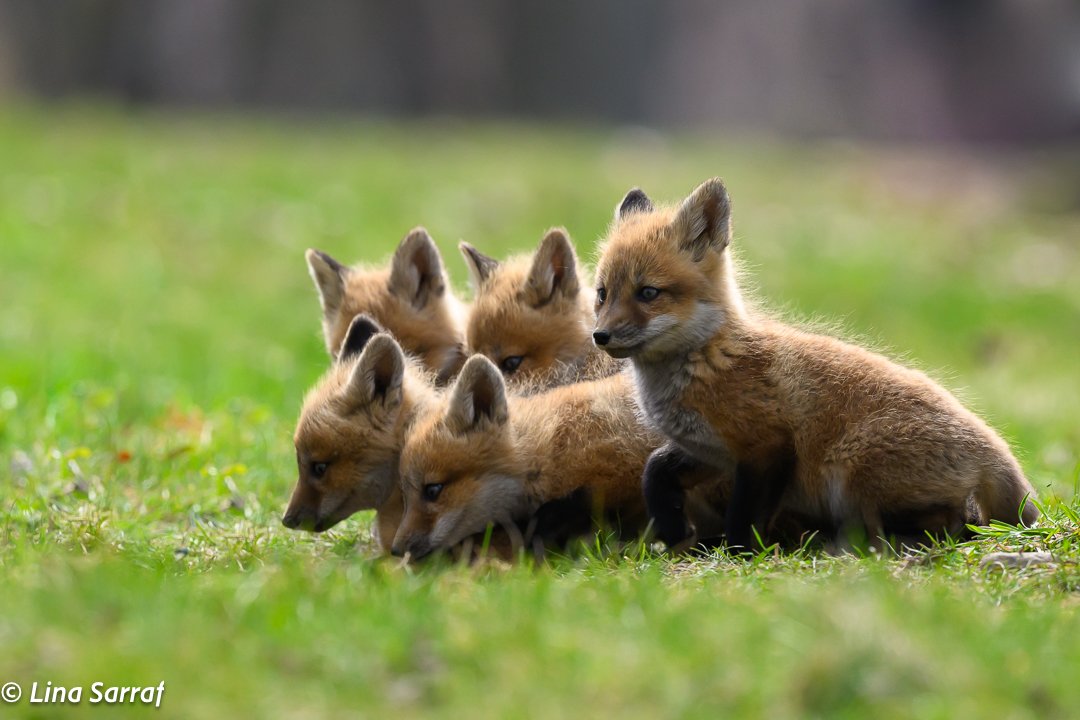
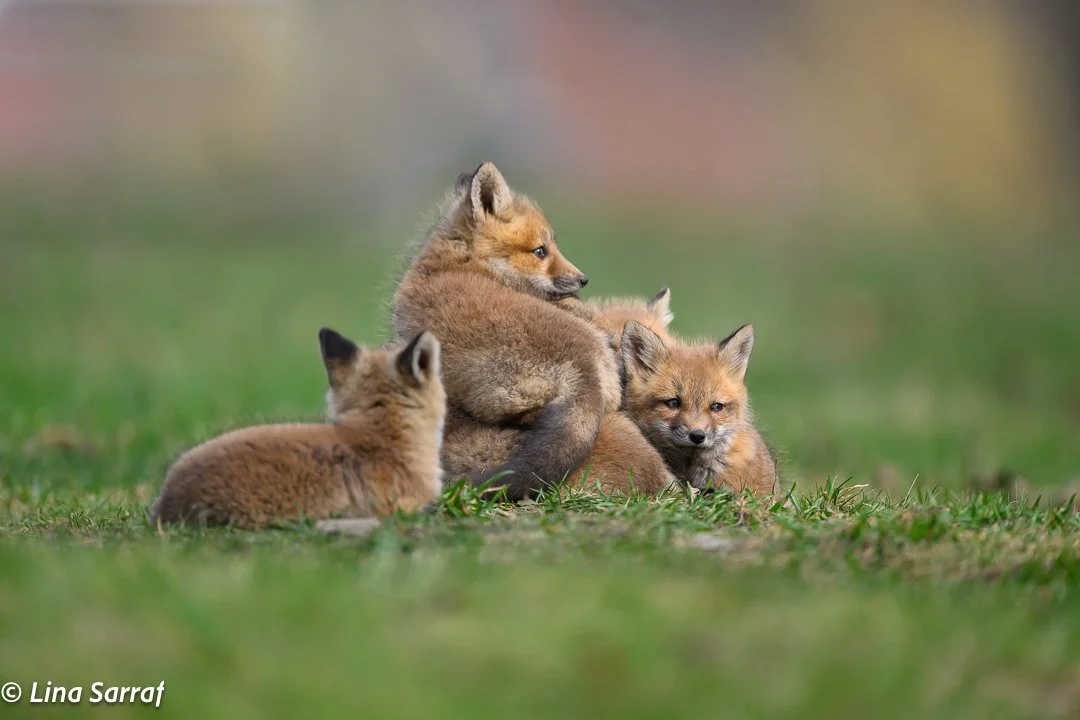
I know, I know, but I want to do it Anyway!
Last year, during my daily walk, I encountered a female fox I named Halley. Each time I saw her, she sat and stared at me for a few seconds before continuing on her way. I never wanted to disturb her by pulling out my camera, even though I carried a telephoto lens in my backpack, until...
At the beginning of April, I saw Halley more often near the same spot, entering and leaving a den that resembled a hedgehog’s den. I sensed something was happening there. I always maintained a respectful distance from Halley, and I couldn’t see signs of breastfeeding on her belly.
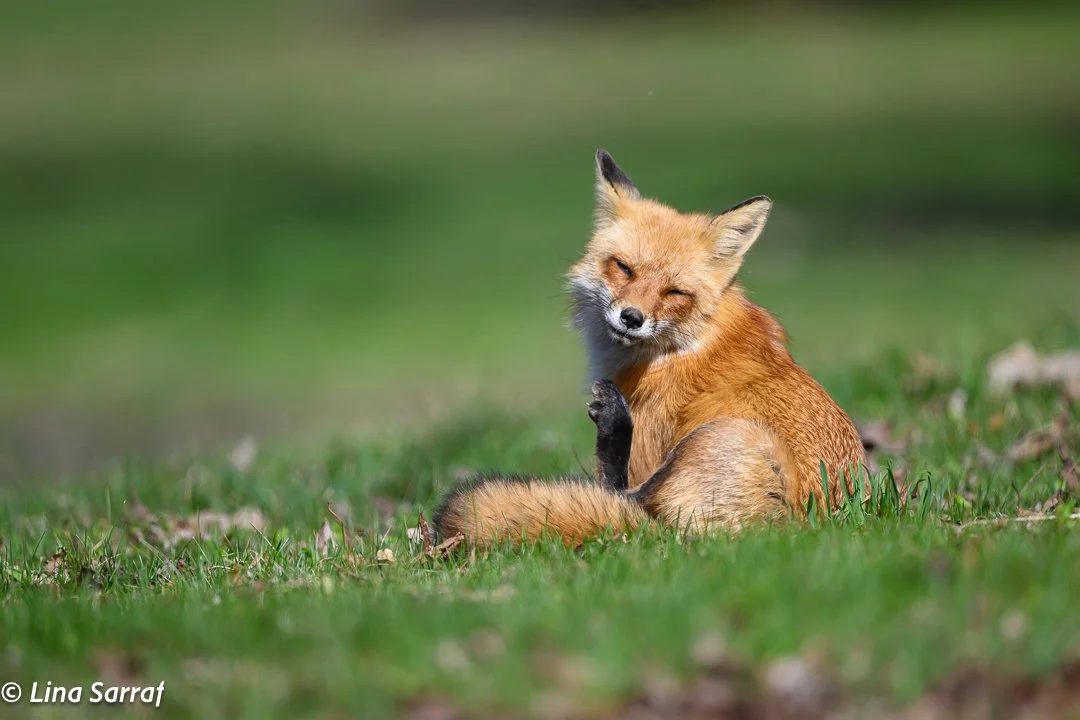
Halley
The area is in a private, well-known city cemetery, on a hillside in a beautiful natural setting. The staff respected the wildlife and were friendly to me, given my background in wildlife conservation photography.
I searched for a hidden spot away from the den to observe activity without disturbing the animals. I found one behind a tombstone about 30 meters from the den and used it until the cubs disappeared.
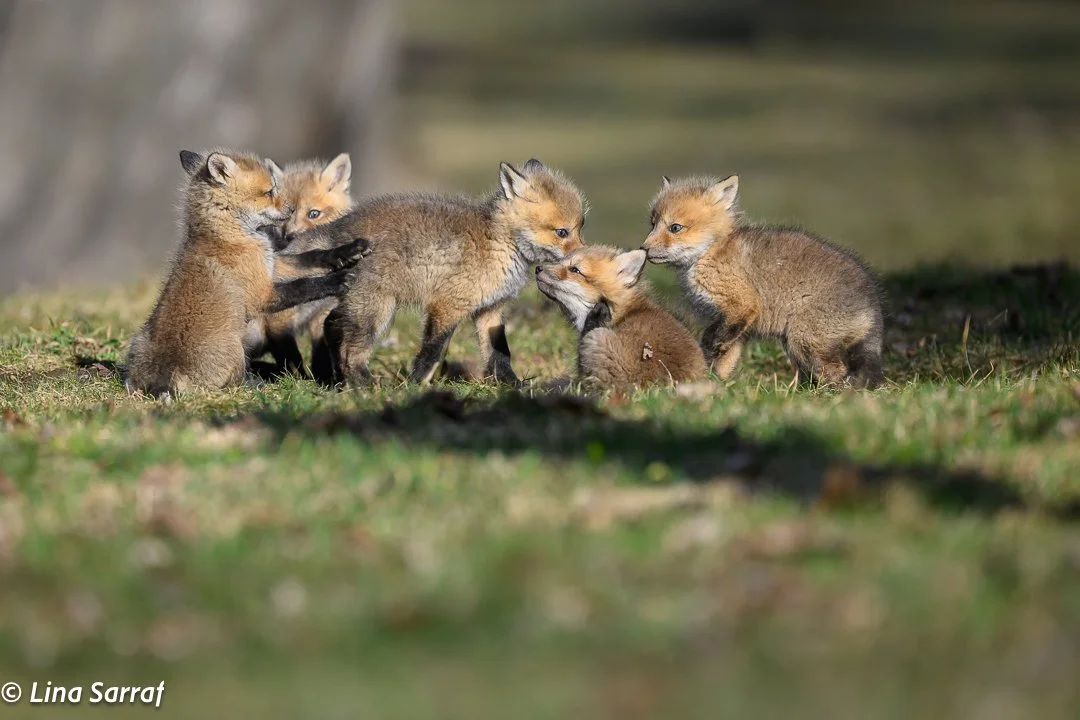
Halley’cubs
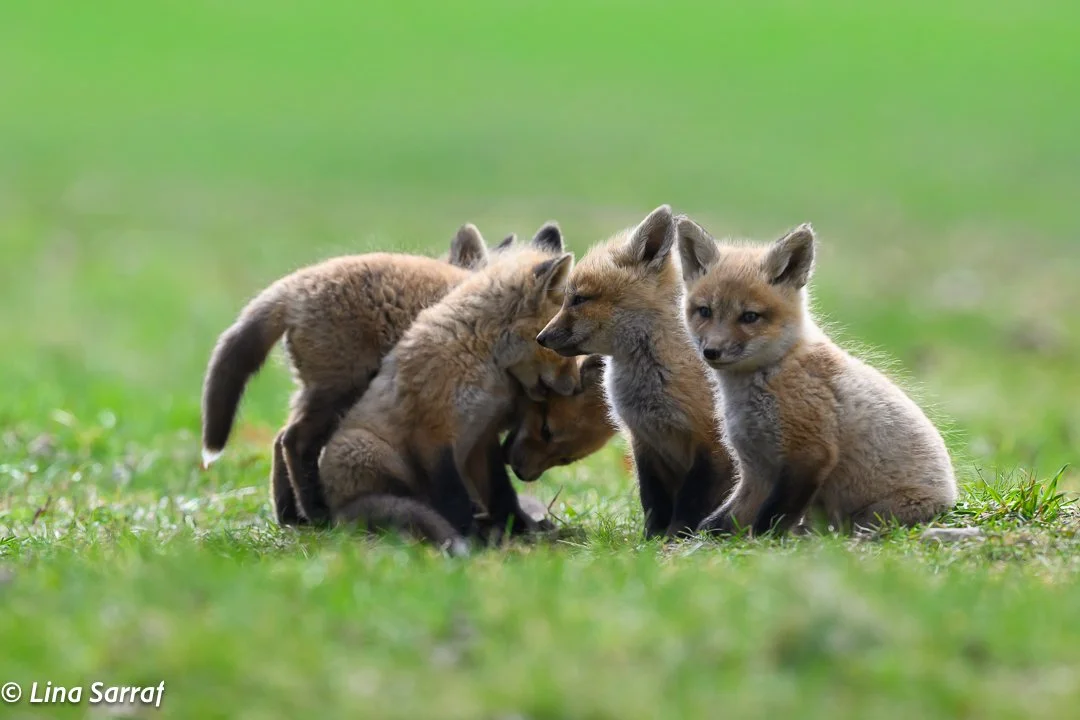
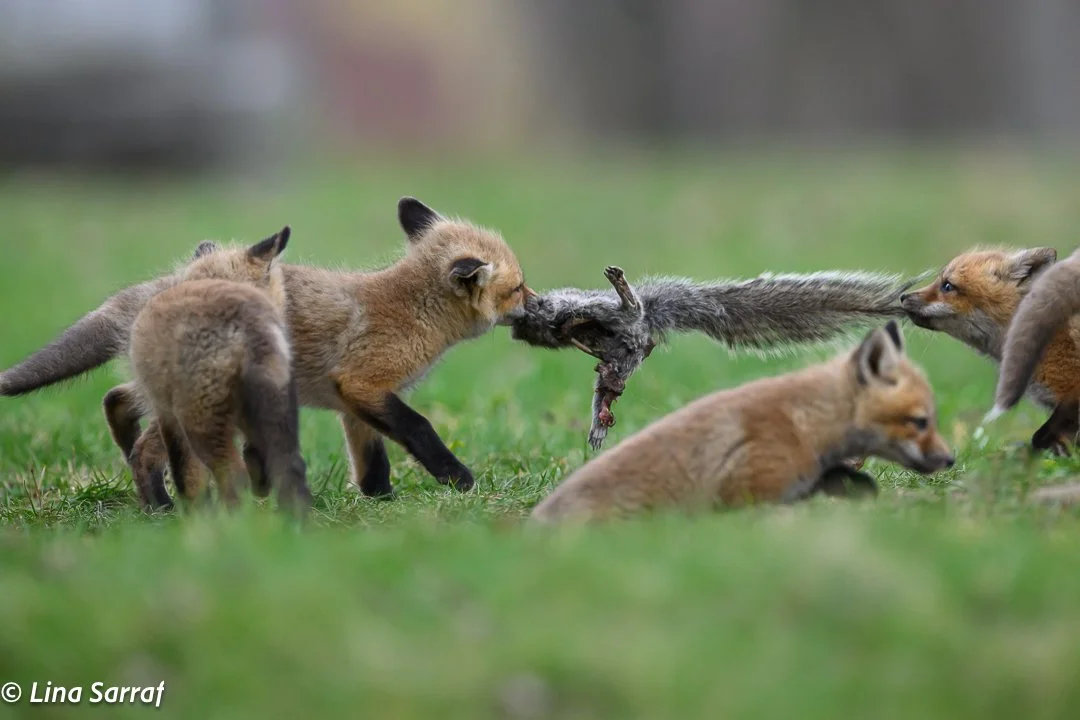
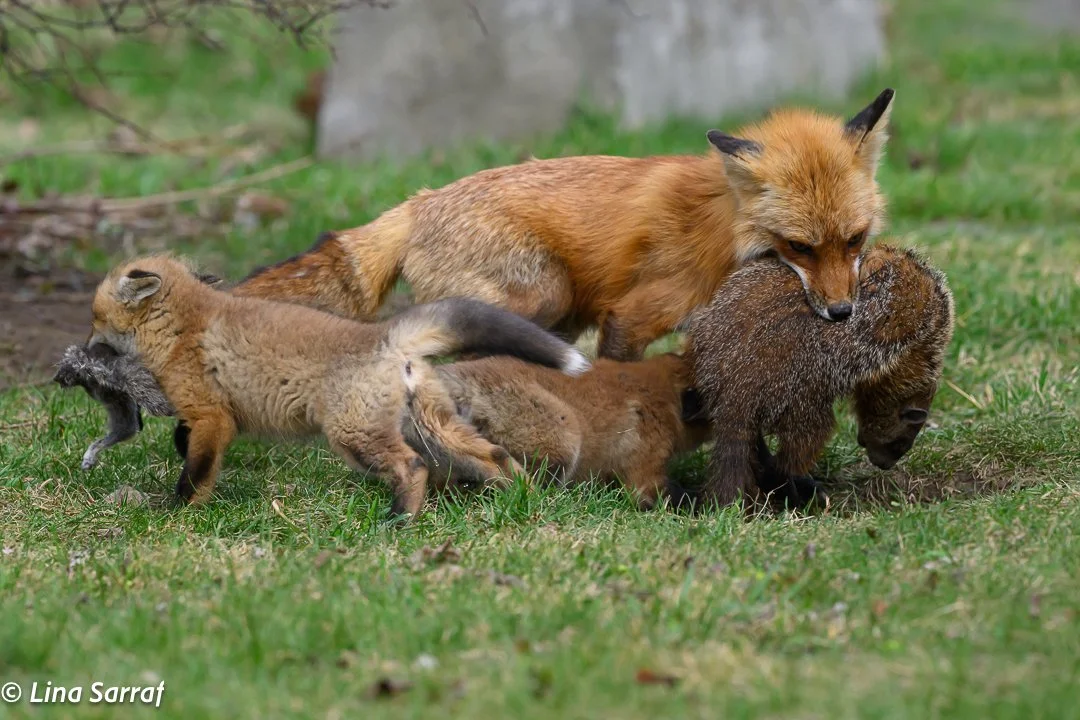
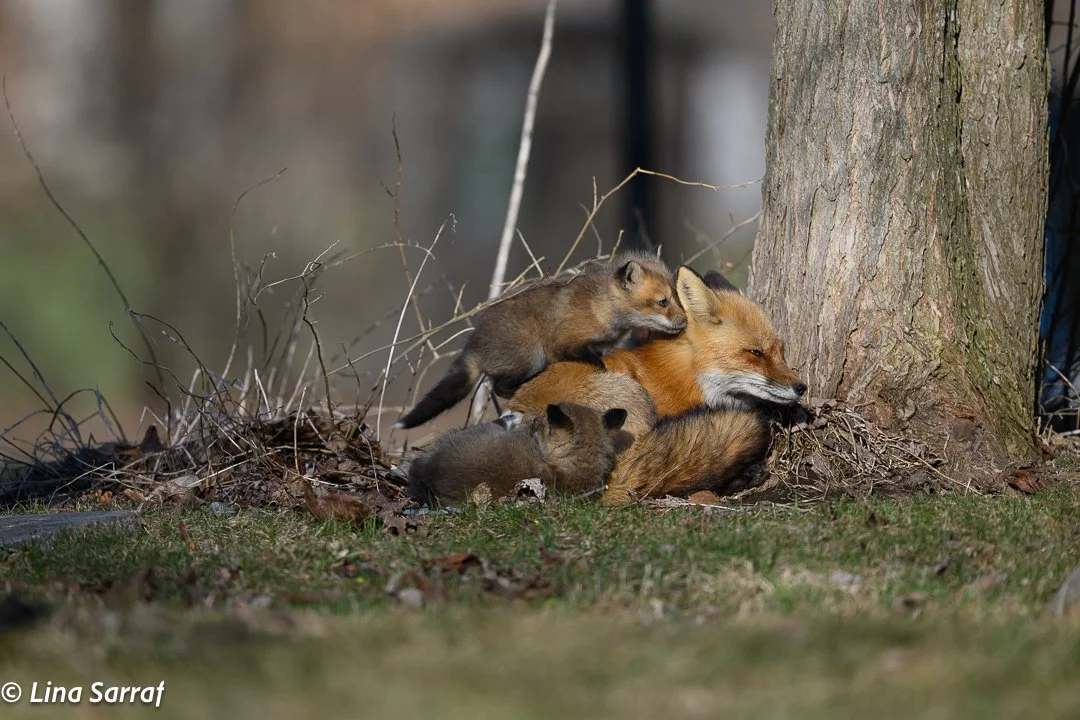
I waited every day in the hide, ready for any action, with my 600 mm TC attached to my Z9. I was there every day, from early morning before the foxes emerged from their den until late afternoon, from my hide, observing and documenting their behaviour. Then, what I expected happened on a sunny, warm day in April, the seventh. I saw a little cub cautiously poke its head out of the den, looking around before stepping into the sunlight. Soon after, another cub followed, slowly emerging and sniffing the air, and then another joined. Eventually, I counted 6 tiny baby foxes, all venturing out to sunbathe and joyfully pounce on each other, tumbling and chasing their siblings. Halley returned a few minutes later, carrying a squirrel in her mouth. While it was difficult to watch the dead squirrel, the scene that followed was joyful—the cubs eagerly dashed to their mother, grabbed the squirrel together, and wrestled it back into the den as a group. The cubs then raced back to Halley, competing for her attention and milk. As she nursed them, she also gently cleaned their fur. After feeding, Halley crouched low and played with her cubs, engaging them in gentle mock hunts and pouncing games, always staying vigilant for danger. A few minutes later, she slipped away again to find more food for her six cubs.
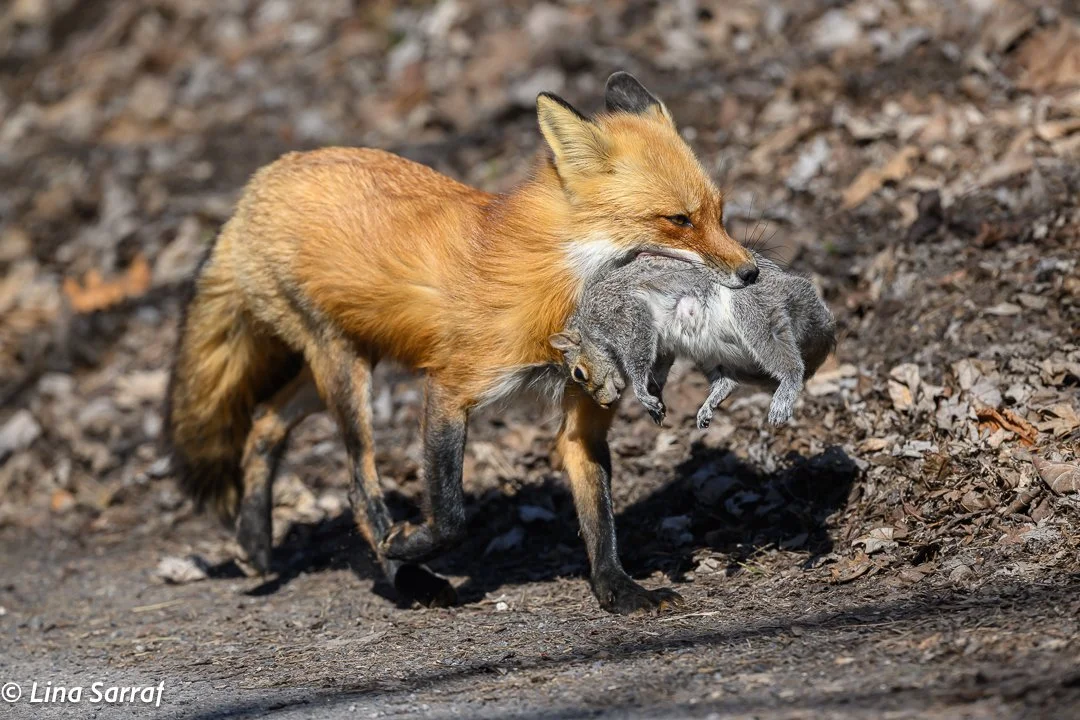
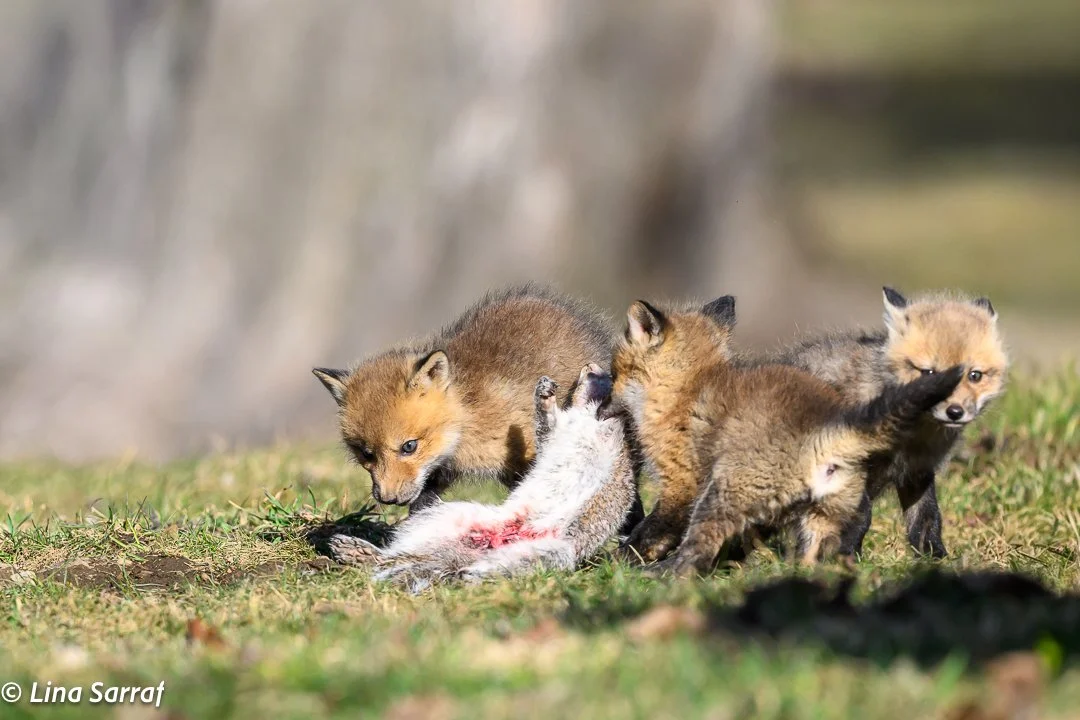
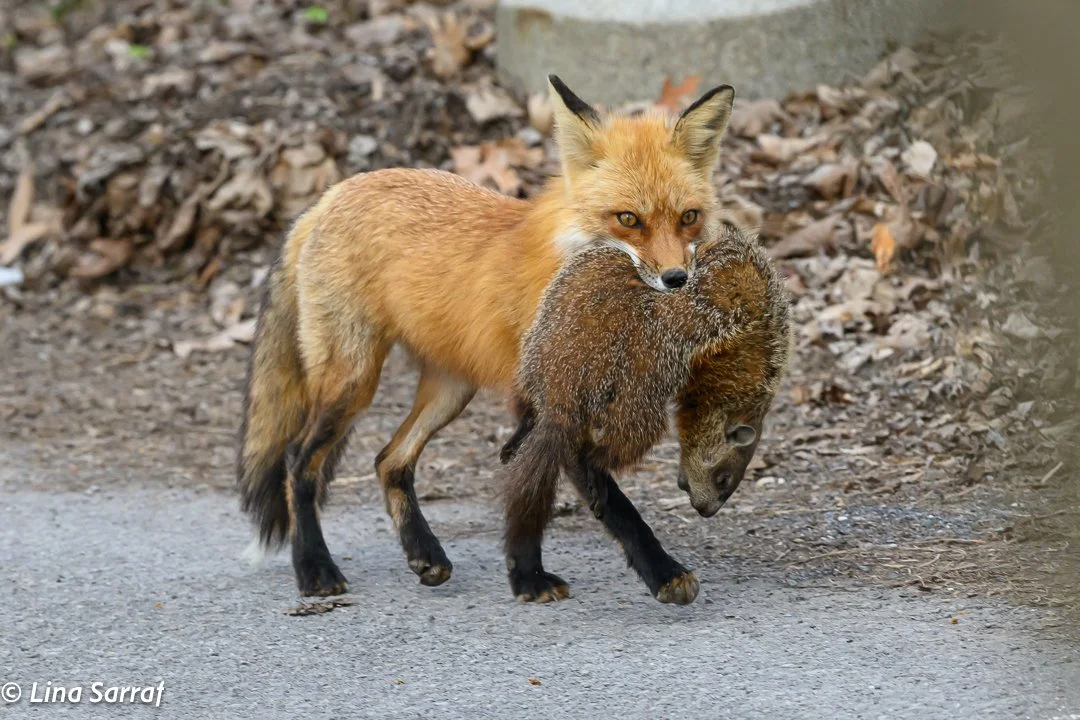
At first, it was a beautiful experience watching these creatures act naturally and feel safe in their surroundings.
After a few days, I could tell the cubs apart despite their similar appearance. Each had a distinct character from the beginning. I recognized each one by its behaviour and watched its personality develop day by day.
The cubs' fur starts to turn from quite dark gray to yellow. Since it is so difficult to tell their sex from a distance, I couldn’t tell whether they were male or female. I named them: Moon, who always liked to play hide-and-seek in a hollow tree trunk, and Pluto, who was romantic; he loved to play alone with branches hidden under a small bush. Jupiter and Saturn were full of energy, running, jumping, playing, and having fun. Then Tornado, the smallest in size but a dominant and very independent cub, could carry a big squirrel or a small marmot in his jaws, run with it and stop his brother and sister from having their share. Finally, Venus, the little one, who always wanted the attention and affection of Halley. He or she was so attached to his or her mom and seemed to want nothing more than to be with her. Halley seemed to understand his/her need, and she was always very caring toward him/her. Even though the six looked mostly alike, I could tell which was which.
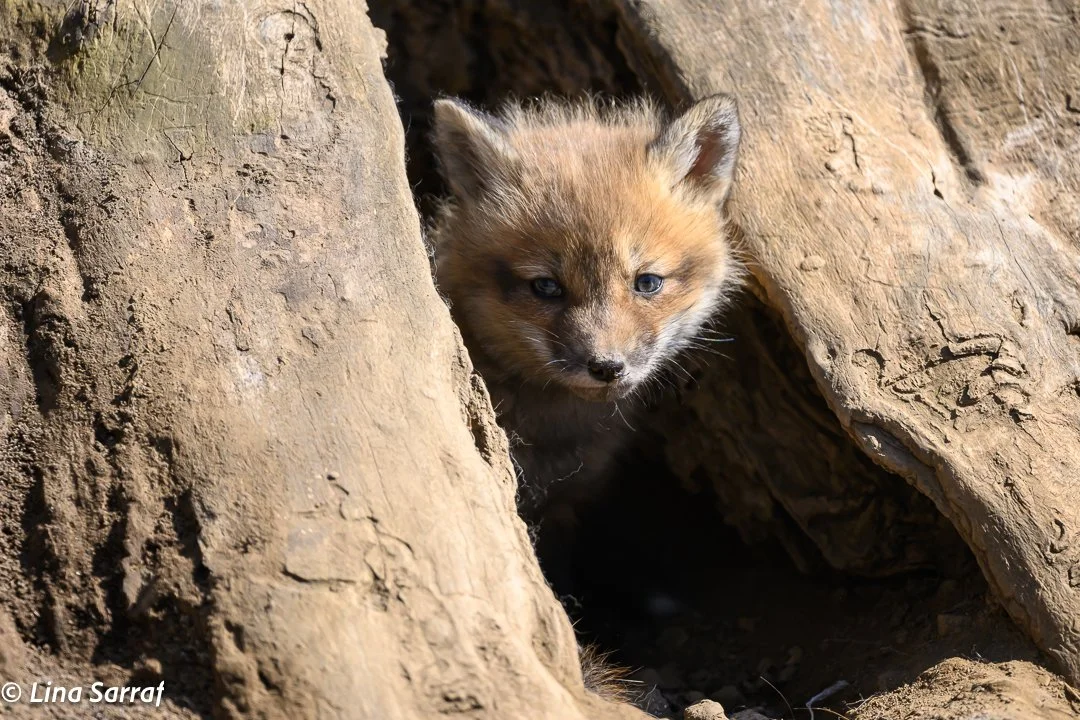
Moon
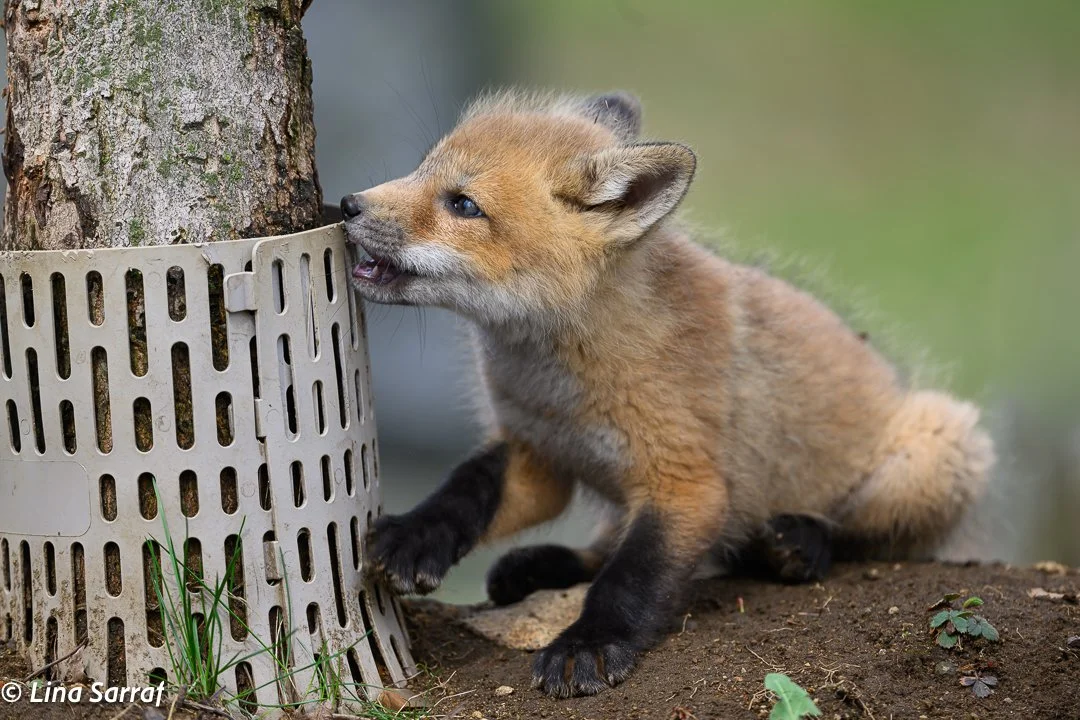
Pluto
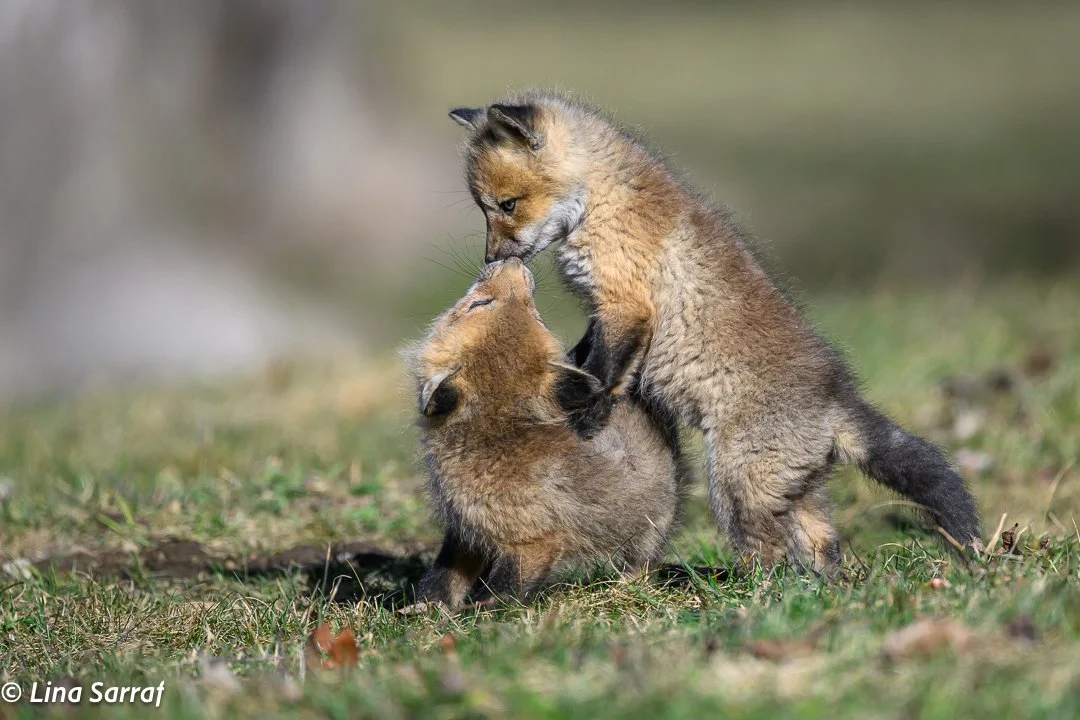
Jupiter and Saturn
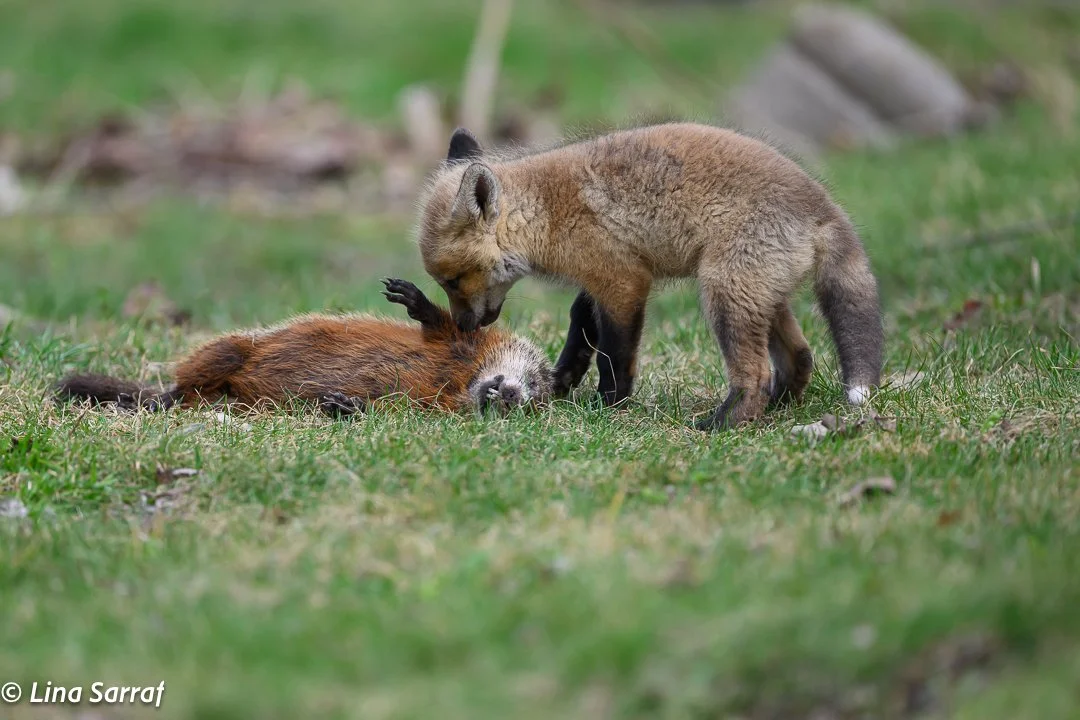
Tornado trying to have the hedghog all for himself
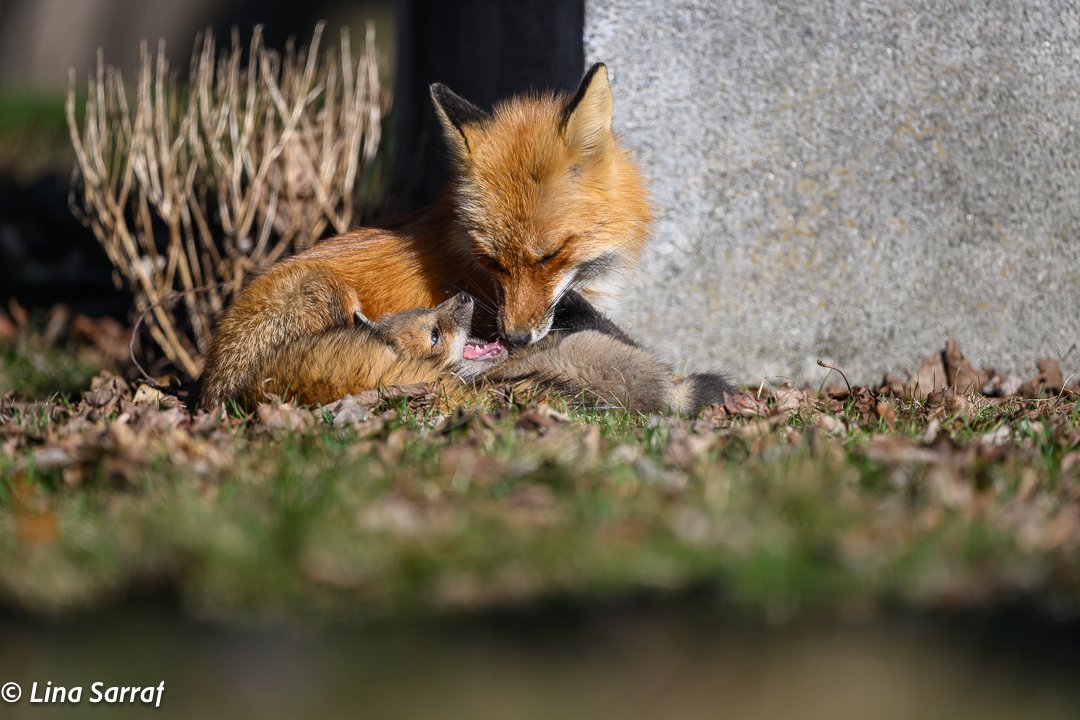
Venus is getting the affection of Halley
Weeks passed while I watched them. Everything was going well. Few people knew about them, and everyone acted responsibly until…
One morning, a man got too close to the cubs to take a selfie while Halley was away. Though we politely asked him to keep his distance and photograph from afar, he responded rudely, telling us to mind our business. He posted his photos online, and new challenges began for the cubs.
People who called themselves photographers started to come in large numbers at any time of day. They would get too close to the den and to the cubs. Some brought their kids, who were running after the babies with their mothers' encouragement, to take selfies with the cubs. Even though one came with his daughter and her harp, he asked her to sit next to the cubs and play her music so he could shoot videos. I tried to intervene and politely asked the people to give these animals some space so they could survive. Each time Halley came, people would harass her to take a photo. When I tried to explain to them that they were putting the fox family's lives in danger for a selfie or a photo to post on social media to get “likes”. All of them always responded in the same way. “I know, I know, but I want to do it anyway.” Some would go further, “ I know, I know, and I don't care.” One lady wanted to take one cub to her home as a pet. I thought she was jogging before I realized she was serious about it.
The situation worsened daily. Cubs were constantly harassed. One day, I witnessed the worst human behaviour: about 12 amateur photographers arrived and harassed the cubs, who were scattered in all directions. Halley couldn’t reach her cubs because she was being harassed as well. It was heartbreaking to see the cubs separated and unable to reach their mom. My friends and I tried to talk to the people, but had no success. I left, in tears.
The next morning, I searched for Halley and her cubs and found only one, who seemed to be searching for his family. Frightened by a car, he hid in a marmot den. In the following days, I searched again, but neither Halley nor her cubs appeared.
Halley was an amazing mom, and I can say she was the best mom I have ever seen among all living things, including humans. She did not have one moment to rest. Taking good care of six baby foxes is a big task. Even when she seemed tired, she knew that she couldn’t rest, she needed to feed the six, teach them to hunt, play with them, give them the love and affection they needed to grow and most importantly, protect them from predators and from the most dangerous one of all,” Human”. Humans have a long way to go before they can become compassionate toward other species, respectful toward wildlife, and see all living things as species like us who share the same need to survive. They are not “Service and product” as we refer to them; they are like us, part of this planet we all call home. We have to learn from all living things because they know how to care for their habitats and avoid destroying their environments, which are crucial to their survival. Halley is my hero, and I keep learning from her every day. I hope all her six and her will live a long life.